NERC CIP-015-1

Operational Insight & Threat Detection for Connected Infrastructure
Assume Compromise is Possible
Detect and Respond to Internal Network Behavior
WHAT IS CIP-015-1
NERC CIP-015-1 is a part of the broader NERC CIP framework, which governs cybersecurity for North American electric utilities. It is a reliability standard designed to protect abnormal or unauthorized activity inside operational networks.
CIP-015-1 expands NERC monitoring expectations beyond perimeter defenses. Earlier CIP standards emphasized continuous security monitoring but were primarily focused on North/South traffic. CIP-015 introduces explicit requirements for internal network monitoring. Assume compromise is possible. Detect and respond to anomalous internal network behavior.
WHO IT APPLIES TO
CIP-015 applies to Responsible Entities operating Bulk Electric System (BES) infrastructure including:
Responsible Entities
- Balancing Authorities
- Distribution providers
- Generator Owner and Operators
- Transmission Owners and Operators
- Reliability Coordinators
- High Impact BES Cyber Systems, and Medium Impact BES Cyber Systems with External Routable Connectivity (ERC)
Facilities in Scope
Mission Critical systems responsible for grid reliability and restoration:
- Load Shedding Systems (UFLS / UVLS) — Automatically shed 300 MW+ of load, operate without human intervention, are part of regulated reliability programs
- Remedial Action Schemes (RAS) — Automated systems designed to protect grid stability during faults or disturbances
- Transmission Protection Systems — Systems responsible for detecting and responding to faults on transmission assets
- Blackstart / Cranking Paths — Infrastructure used to restore power generation after a blackout, including initial startup paths between generation units
And for all other entities: All Bulk Electric System (BES) Facilities
HOW IOLITE HELPS
Iolite provides a comprehensive solution designed specifically for the unique challenges of operational technology (OT) environments, helping organizations meet and exceed NERC CIP-015-1 requirements.
CIP-015 represents a major shift in cybersecurity for critical infrastructure. iolite enables organizations to meet CIP-015 requirements natively while improving real security outcomes, not just audit readiness
- From Perimeter Defense
- To Continuous Monitoring and Detection

Native Internal Network Visibility
- Continuous monitoring of OT, IT and IoT traffic
- Full visibility of Internal ESP (not just the perimeter)

Intelligent Anomaly Detection
- Behavioral baselining
- Reduced false positives with customizable detections

Contextual Alerting & Evaluation
- Alerts mapped to operational processes and threat relevance

OT First, not IT Adapted
- A platform built for low resource environments
- Designed for connected infrastructure monitoring across IT + OT
- Focused on operational insight + threat detection convergence
KEY REQUIREMENTS
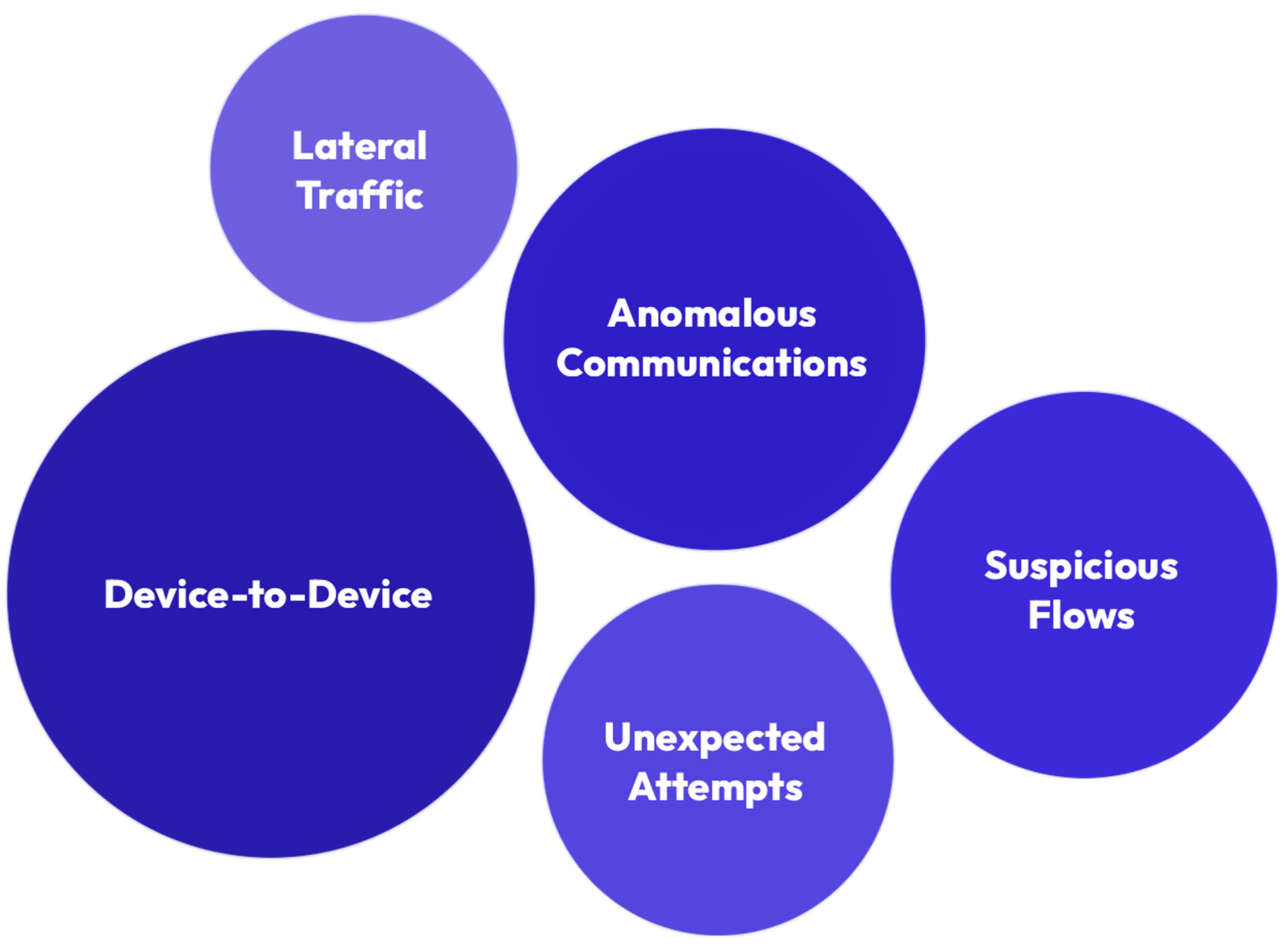
CIP-015 addresses East/West communications inside the Electronic Security Perimeter (ESP), and is built around three core requirements (R1–R3):
R1 – Internal Network Monitoring & Detection
Organizations must implement network data feeds to:
- Collect network telemetry — Including Connections, Devices, and Network Communications
- Detect anomalous network activity — Baseline vs abnormal behavior; threat indicators or deviations
- Evaluate anomalies — Determine severity & determine response actions
R2 – Data Retention
- Retain internal network security monitoring data related to detected anomalies
- Keep data until response actions are complete

R3 – Data Protection
Protect monitoring data from:
- Unauthorized deletion
- Tampering or modification

WHERE ORGANIZATIONS STRUGGLE AND HOW IOLITE HELPS
Existing approaches often rely on heavy footprint IDS sensors, specialized monitoring agents and high-cost asset management systems. There is a need for lightweight, low overhead network sensors and targeted monitoring in constrained environments.
Organizations of all size may be looking for solutions such as:
- Selective replacement of high-cost sensors at renewal cycles
- Instrumentation of smaller network segments
- Supplemental monitoring alongside incumbent IDS vendors
- Closing coverage gaps in distributed OT environments
1. Lack of Internal Visibility
Most OT environments were never designed for internal monitoring — lack deep packet visibility or east-west traffic insight.
2. Defining "Anomalous" Behavior
No baseline of "normal" OT communications — high false positives from IT-centric tools.
3. Fragmented Tooling
Firewalls ≠ internal monitoring. SIEMs lack OT context. IDS tools are noisy or incomplete.
4. Data Retention & Integrity
Storing the right data (not everything) is hard — ensuring tamper-proof logs across environments is harder.
5. Operational Burden
Manual analysis of alerts, limited OT cybersecurity talent, difficulty tying alerts to real operational risk.


.svg)